
House of Bid
Is your inherited silverware worth anything?
Sterling silver is worth more than silverplate because it's roughly 92.5% silver all the way through, while silverplate is a thin layer over a base metal. Check the back or underside for a hallmark, weigh the piece if you can, and note the maker and pattern before assuming anything is 'just old silver.' Condition and demand for the specific pattern often matter more than the silver content alone.
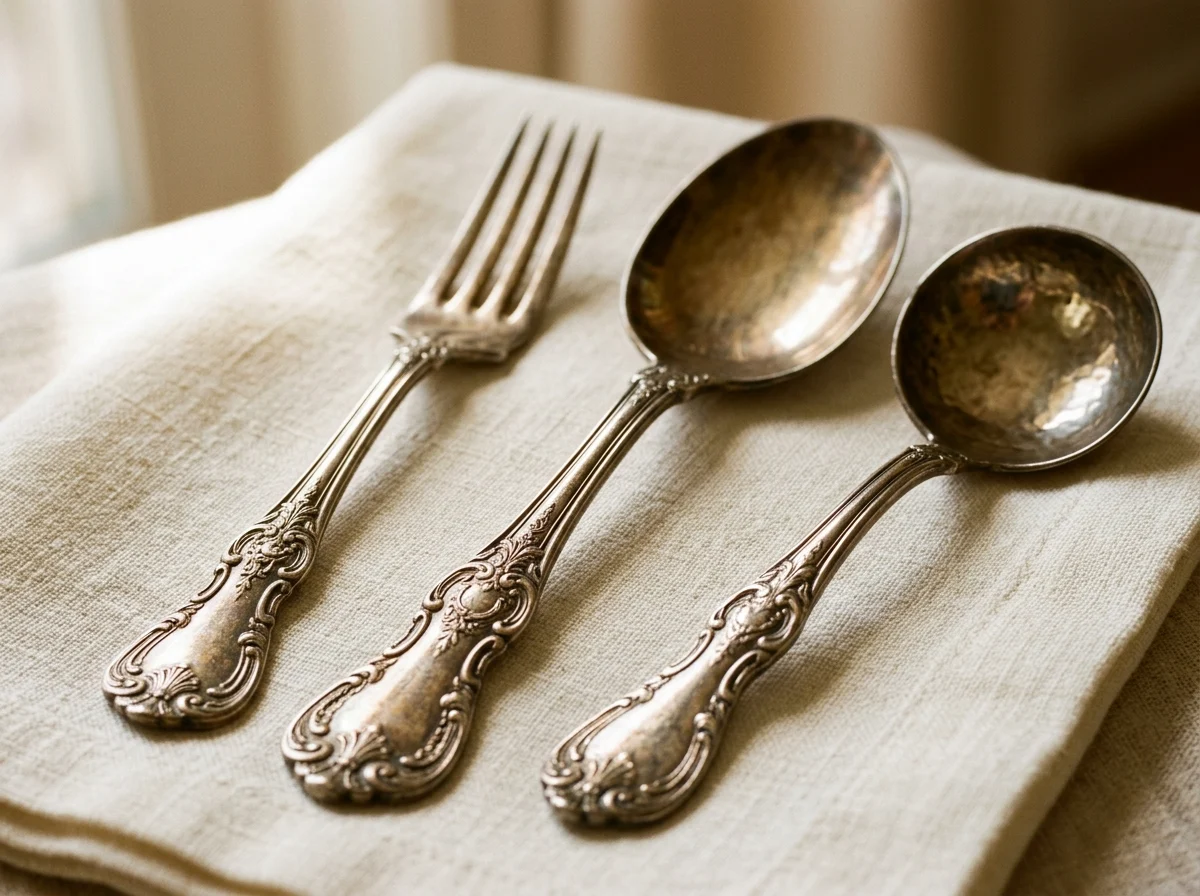
Sterling or silverplate: check the marks first
Flip the piece over. Sterling is usually stamped 'Sterling,' '.925,' or 'Sterling Silver.' Silverplate carries maker or process marks like 'EPNS,' 'Rogers,' 'Community,' or 'Silver on Copper' — no purity number, because there isn't one to claim. A magnet won't tell you much; most silverplate bases aren't magnetic either. If you see wear spots showing a yellowish or coppery metal underneath, that's plate, not solid sterling.
Weight and melt value aren't the whole story
Sterling has real melt value because it's mostly silver by weight — heavier pieces carry more of it. But melt value is a floor, not a ceiling. A worn, dented set with no collector interest might be worth close to its metal weight. A set in excellent condition, in a pattern people actively collect, can be worth considerably more than the silver in it. Don't assume the scrap price is the real price until you've ruled out the alternative.
Maker and pattern move the price
Look for a maker's name or symbol near the purity mark — well-known American and English silversmiths tend to have stronger, steadier demand than unmarked or small regional makers. Pattern matters almost as much: some flatware patterns have active collector followings and buyers looking to complete sets; others don't. A large, complete set in a wanted pattern is worth pursuing seriously. A handful of mismatched pieces in an obscure pattern is a different conversation.
Condition, monogram, and what it costs to fix
Dents, thin spots from over-polishing, and loose knife handles all reduce value because repair costs money. A monogram is not automatically a dealbreaker — some buyers don't mind it, especially on hollowware — but it does narrow the buyer pool for flatware. Before assuming a set is only good for scrap, get real signals: a jeweler with a scale, a reputable estate specialist, or a formal appraisal if the amount involved would justify the cost.
Questions
How can I tell sterling from silverplate without a professional?
- Look for a purity stamp like 'Sterling' or '925' — plate won't have one. Worn spots showing a different metal underneath, or marks like 'EPNS,' are signs of plate, not solid silver.
Does a monogram ruin the value?
- It lowers the pool of interested buyers for flatware but rarely erases the value entirely, especially if the silver content, maker, and pattern are otherwise desirable.
Should I get a set appraised before selling it?
- If the set looks substantial — heavy, marked sterling, in a known pattern — a written appraisal is worth getting before you sell, insure, or divide it among heirs. If you do decide to sell, a timed estate auction lets bidders compete for it instead of you guessing at one fixed price.