House of Bid
How to identify sterling silver hallmarks
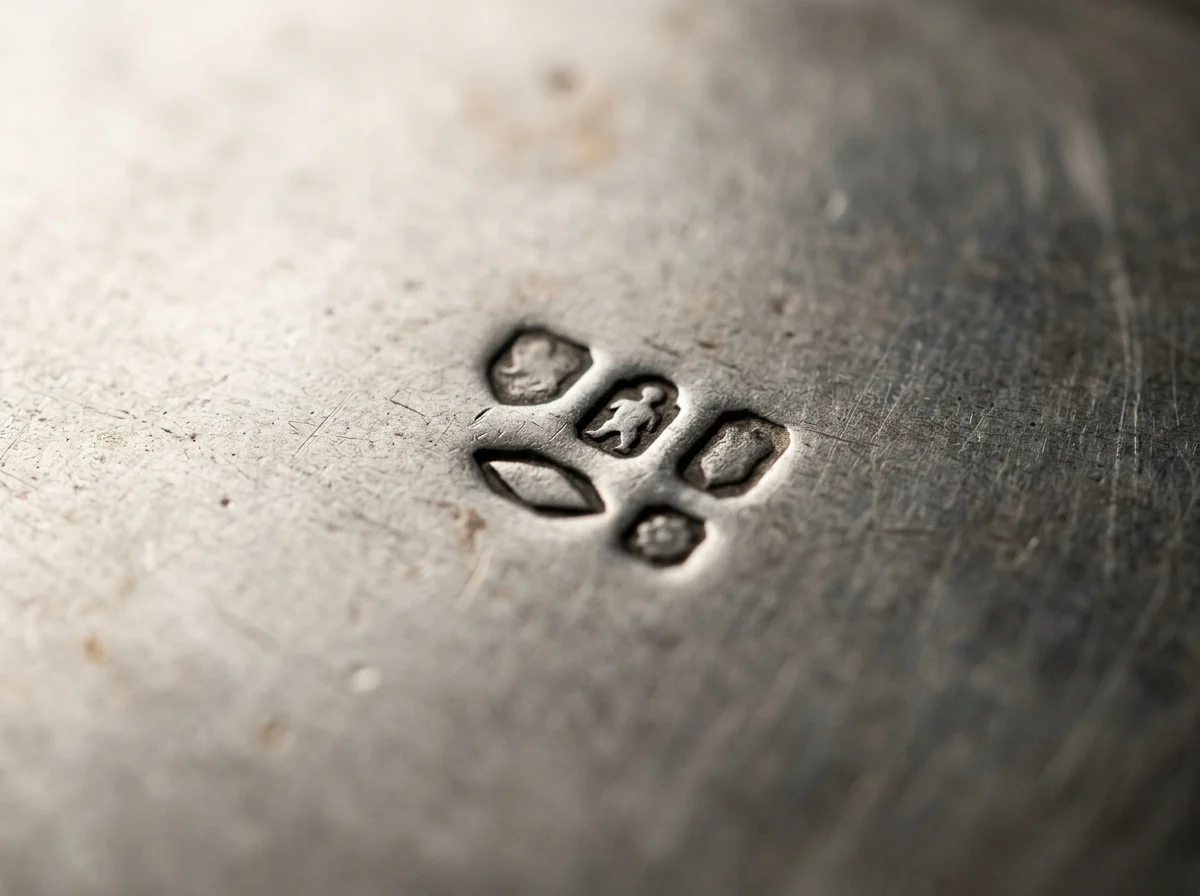
A hallmark is a small stamped mark, usually on the back or underside of a piece, that can indicate purity (like '925' or 'Sterling'), country of origin, and sometimes the maker and date. American pieces often just say 'Sterling'; British pieces use a fuller system of purity, city, and date letters. A hallmark is a clue to research further, not proof of age, authenticity, or value on its own.
What a hallmark actually tells you
A hallmark is stamped into the metal, usually where it won't show in normal use — the underside of a bowl, the back of a spoon handle, inside a ring band. At minimum it can indicate purity: how much of the object is actually silver versus base metal. Some systems add more — country of origin, city of assay, a maker's symbol, even a letter code for the year. Not every mark includes all of that; older and handmade pieces sometimes carry only a partial stamp.
Reading purity marks: 925, Sterling, and the lion passant
'.925' or 'Sterling' means the piece is at least 92.5% silver by weight, the standard for sterling. British silver often carries a walking lion figure — the lion passant — as its purity mark instead of a number. Other countries use their own systems: numeric fineness marks, national symbols, or assay office stamps. If you can't identify the system, photograph the mark clearly and compare it against reference guides rather than guessing at what it means.
Maker's marks and date letters
Beyond purity, many hallmark systems include a maker's mark — initials or a symbol tied to a specific silversmith or manufacturer — and sometimes a date letter, a rotating alphabet code that narrows a piece to a specific year or range of years. American silver rarely used date letters the way British silver did, so an American piece may only give you the maker's name to research. These marks are identification tools, not certificates — they point you toward the right reference, not a final answer.
Why a mark alone doesn't set the price
A hallmark confirms what the object is made of and sometimes who made it. It doesn't account for condition, wear, repairs, whether pieces in a set match, or whether collectors are currently interested in that maker or pattern. Two pieces with identical marks can be worth very different amounts once you factor in dents, replated repairs, or a matching set versus a single odd fork. Treat the hallmark as your starting point for research, not your final number.
Questions
What does '925' mean stamped on silver?
- It means the item is at least 92.5% pure silver, the international standard for sterling. The remaining percentage is usually copper, added for strength.
Can I date a piece just from its hallmark?
- Sometimes. British silver often includes a date letter that narrows a piece to a specific year or short range. American silver usually doesn't work the same way — you may only be able to identify the maker, then research when that maker was active.
If a piece has a hallmark, does that guarantee it's genuine?
- No. Marks can be worn, altered, or copied, and a genuine mark still doesn't tell you about condition or demand. Treat a hallmark as a lead to verify, not proof by itself.