
House of Bid
Is grandma's china actually worth collecting?
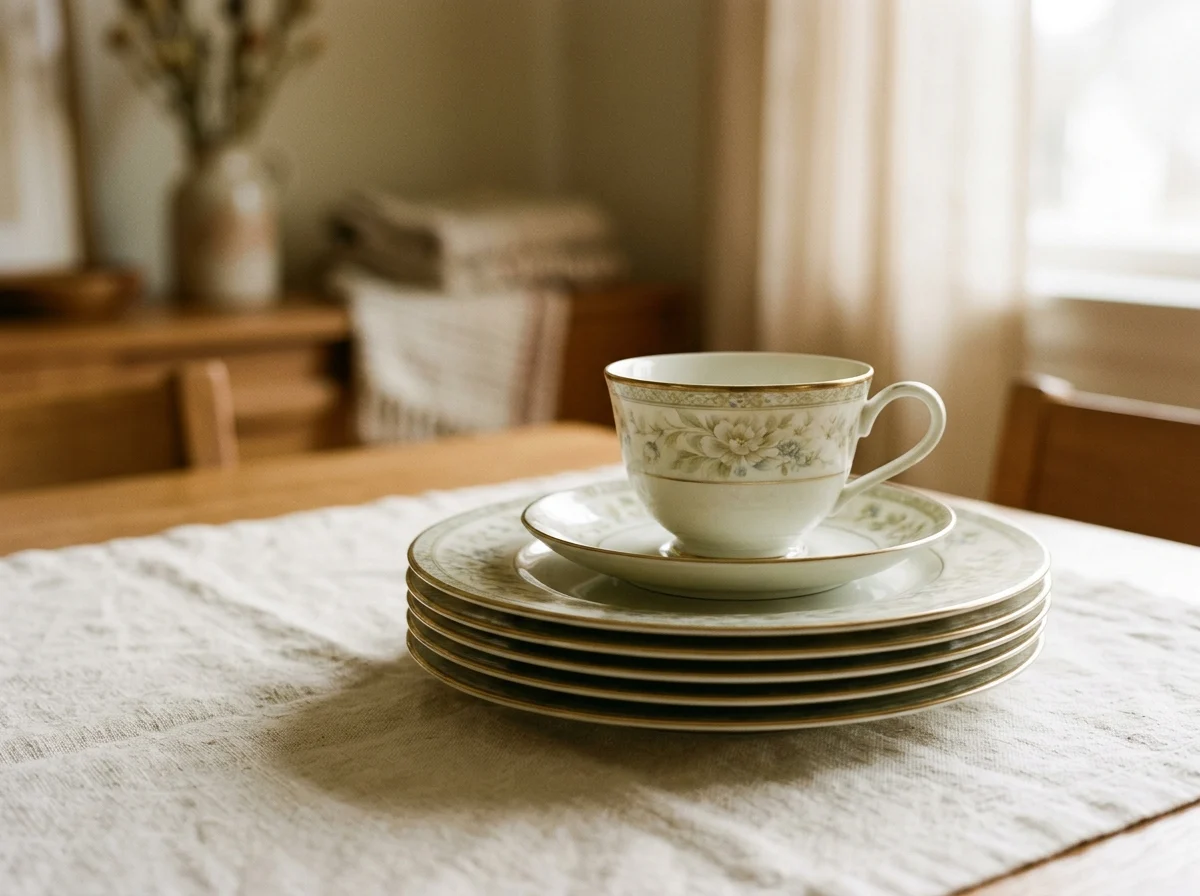
Some inherited china is genuinely collectible, but most everyday formal sets from the mid-to-late 1900s are worth far less than families expect — demand for full dinnerware services has dropped. What separates them is the backstamp, whether the pattern was limited or discontinued, completeness, and condition. Check the backstamp before assuming either extreme.
Start with the backstamp
Turn a plate over and look for the maker's mark, usually printed or stamped on the underside, along with a pattern name or number. This mark identifies the manufacturer and often the specific pattern, both of which you can research to see whether that maker or pattern has any collector following. Backstamp styles also changed over time for most manufacturers, which can help date the set. A clear, legible backstamp is the single most useful piece of information on any china piece you have.
Pattern rarity and whether it's discontinued
A pattern still in active production today, especially from a major manufacturer, is easy to find and typically not scarce. A limited-run or long-discontinued pattern, particularly from a well-regarded maker, can have real interest among collectors and people trying to replace broken pieces from their own set. Researching the specific pattern name, not just the maker, is what tells you which category you're in, since the same manufacturer made both common and genuinely scarce patterns over the years.
Completeness and condition
A full, matched service for eight or twelve, with serving pieces intact, is worth pursuing further than a partial set missing key pieces, since buyers replacing broken china specifically look for complete runs. Check every piece for chips, cracks, hairline fractures, and crazing — the fine network of surface cracks in the glaze that develops with age and use. Worn or flaking gold or platinum trim also affects desirability. Damage doesn't always mean discard, but it does lower what a set realistically commands.
The honest state of the china market
Demand for full formal china sets has declined significantly over the past couple of decades, as fewer households host formal sit-down dinners or keep full sets in a china cabinet. That's a real, lasting market shift, not a temporary dip, and it affects common patterns more than rare ones. This doesn't mean china has no value — well-marked, complete, discontinued patterns from respected makers still find buyers — but a set's sentimental importance and its current market value are often two very different numbers.
Questions
Does a complete set matter more than individual rare pieces?
- Generally yes for typical formal dinnerware, since buyers replacing sets want completeness. But an unusually rare pattern or maker can still be worth pursuing even incomplete.
Why isn't grandma's china worth what it used to be?
- Fewer households use full formal sets today, so demand for common patterns has dropped. Discontinued or rare patterns from noted makers are less affected.
How do I know if my set is genuinely rare versus just old?
- Research the backstamp and specific pattern name and see how available it currently is. For a formal opinion of value, a certified appraiser familiar with porcelain can confirm rarity and condition.