
House of Bid
Art glass and pottery marks: how to identify them
Value in art glass and pottery comes from a combination of maker, method, and condition, not any single clue. A mark on the base is a starting point for research, not proof by itself. Hand-tooled or hand-thrown pieces generally carry more interest than mold-cast or mass-produced ones. A chip, crack, or repair can drop a piece's desirability sharply even when the maker is well known.
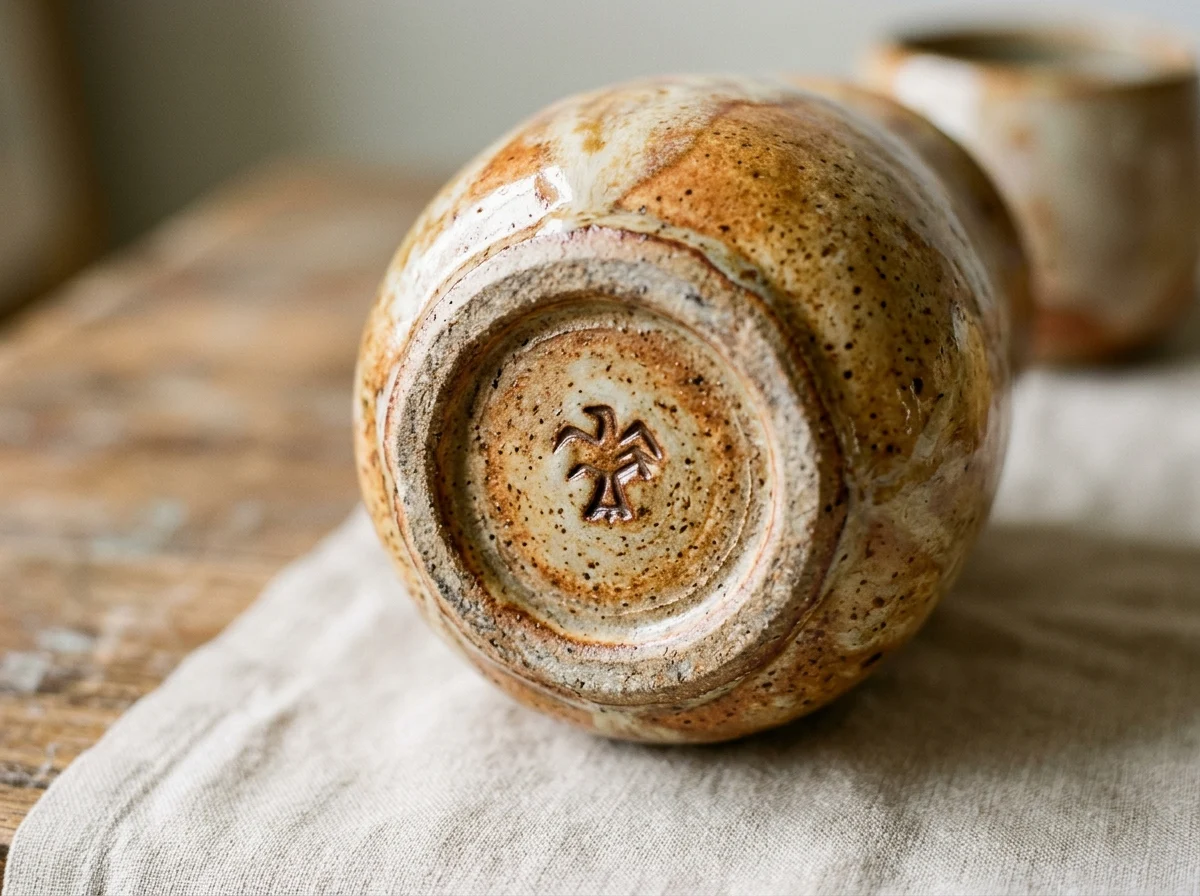
What a mark can and can't tell you
Most studio glass and pottery carries a mark on the base: an etched signature, a stamped logo, a paper label, or an incised set of initials. That mark narrows down who made it and roughly when, which is useful for research. It does not, by itself, confirm authenticity or set a value. Paper labels fall off, stamps get reused across decades, and some marks are applied by a retailer rather than the actual maker. Treat a mark as a lead to follow, not an answer.
Hand-blown or hand-thrown vs. molded and mass-produced
Hand-blown glass tends to show a pontil mark (a rough or ground scar) on the base where it was worked off the blowpipe, plus slight asymmetry in shape. Mold-blown or pressed glass often has visible seam lines and a more uniform, mirror-image form. In pottery, look at the foot: a hand-thrown piece usually has faint throwing rings and a slightly uneven rim, while slip-cast production pieces are more perfectly symmetrical and thinner-walled in a consistent way. Neither test is absolute, but the pattern is a real signal worth weighing.
Studio work vs. factory production
Studio pottery and art glass are usually made in small numbers by an individual or small workshop, often with some variation piece to piece. Factory lines are made to a repeatable pattern for volume, even when they're well designed and decades old. Neither category is automatically worth more just for being old. A well-documented studio piece with a clear maker history can outperform a factory piece from the same era, and the reverse is also true. Demand for a specific maker or design matters as much as who made it by hand.
Why condition changes everything
Chips, cracks, crazing, and repairs are common in glass and pottery that's been handled or displayed for decades, and they matter more here than in almost any other category. A visible repair, a ground-down chip, or hairline cracks can significantly reduce interest even on a piece with a desirable mark. Run your fingers along rims and edges in good light, and check the base for grinding marks that suggest a chip was smoothed down rather than left alone. Original, undamaged condition is worth protecting and disclosing honestly.
Questions
Does an unmarked piece have no value?
- Not necessarily. Many desirable pieces were never marked, or the mark wore off or was on a paper label that's gone. Shape, technique, and condition still matter, but expect more research to identify an unmarked piece.
Can I clean an old piece before having it looked at?
- Use a soft cloth and avoid abrasives, solvents, or dishwashers on anything you suspect is old or handmade. Cleaning can dull a glaze, remove a label, or add damage that wasn't there before. When in doubt, leave it as found until it's been evaluated.
What if I need a value for insurance or an estate filing?
- For insurance, tax, or estate purposes you need a written appraisal from a certified appraiser, not an online opinion. Auction estimates are a market starting point, not a substitute for that documentation.