
House of Bid
Are musical instruments in an estate worth selling?
Whether an inherited instrument is worth selling depends on maker, condition, playability, and current demand — not age. Old upright pianos are hard to sell because moving and tuning often cost more than a buyer will pay. String instrument labels naming a famous maker are usually later copies. A playable, known-brand instrument is the best auction candidate.
Brand and maker still matter most
For pianos, guitars, and band instruments, the maker's name and model are the first real filter: certain brands and shops built instruments that hold demand decades later, while others were built for volume and never held resale value even new. Check the manufacturer's stamp or label, usually inside the piano case, on a guitar's headstock or inside the body through the sound hole, or on a brass instrument's bell. Knowing exactly what you have is the starting point before deciding whether it's worth listing at all.
Condition and playability decide the rest
An instrument that's been stored in a damp basement or garage for years often has real problems: warped wood, rusted strings or valves, a cracked soundboard, or pests. Buyers for used instruments are generally buying something to actually play, so a non-functional instrument competes on parts value only, which is usually low. A playable, in-tune, well-maintained instrument from a recognized maker is a meaningfully different sale than the same model that hasn't been touched in twenty years.
Be honest about old upright pianos specifically
This is worth saying plainly: most old upright pianos have very low resale value today. Decades of production left a large supply of them, digital pianos and keyboards reduced demand, and moving an upright is expensive and physically difficult. In many cases the cost of moving a piano exceeds what anyone will pay for it, which is why so many end up donated, given away free, or, if unplayable and unwanted, disposed of. A well-known concert-grade brand in excellent condition is the exception; a generic decades-old home upright usually is not.
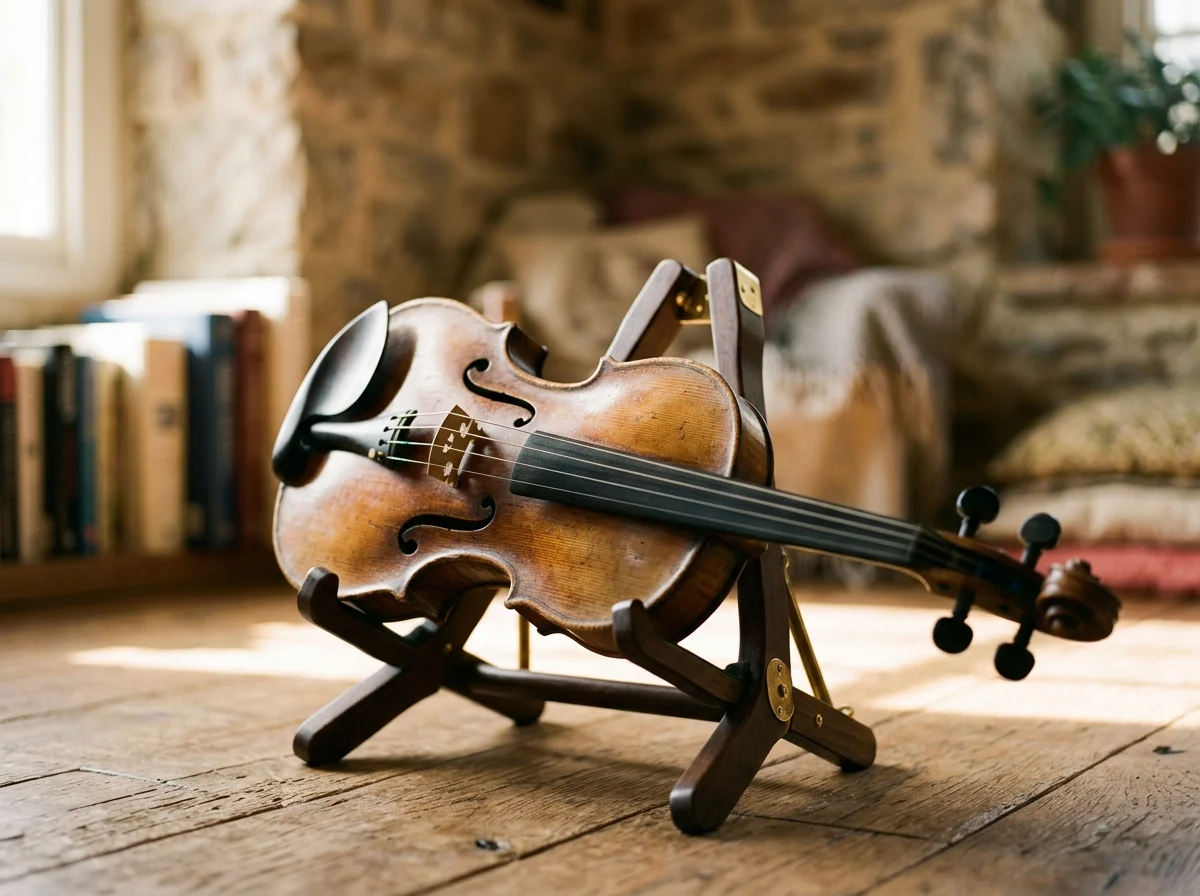
Why a label inside a violin or guitar isn't proof
Many violins, and some guitars, carry a printed label inside claiming a famous maker's name. In the vast majority of cases, these are later copies, student instruments, or factory pieces made 'in the style of' that maker, not an actual authenticated original. A label alone doesn't establish who really made an instrument. Genuine attribution to a significant maker requires expert examination of the wood, construction, and varnish, not just reading what's printed on the paper inside.
Questions
Should I sell or donate an old piano?
- If it's a well-known, high-quality brand in good playable condition, selling or consigning it can make sense. If it's a generic older upright with unclear demand in your area, donation, giveaway, or removal is often more realistic once moving costs are factored in.
How do I find the maker's name on an instrument?
- Look for a stamped plate or label inside a piano case, a headstock logo or label visible through a guitar's sound hole, or an engraved name on a brass instrument's bell. Photograph what you find before doing any research.
Do I need an appraisal for a valuable or rare instrument?
- Yes, for insurance, estate, or donation purposes you need a written appraisal from a qualified instrument appraiser, ideally one who specializes in that instrument type.