
House of Bid
Old books and manuscripts: when are they worth something
Most old books are common and worth very little, including family bibles and anything simply a century old. Value depends on edition, dust jacket presence and condition, verified signatures, and physical condition. Old, leather-bound, or gilt-edged is not by itself a sign of worth. First editions in original jackets are the exception.
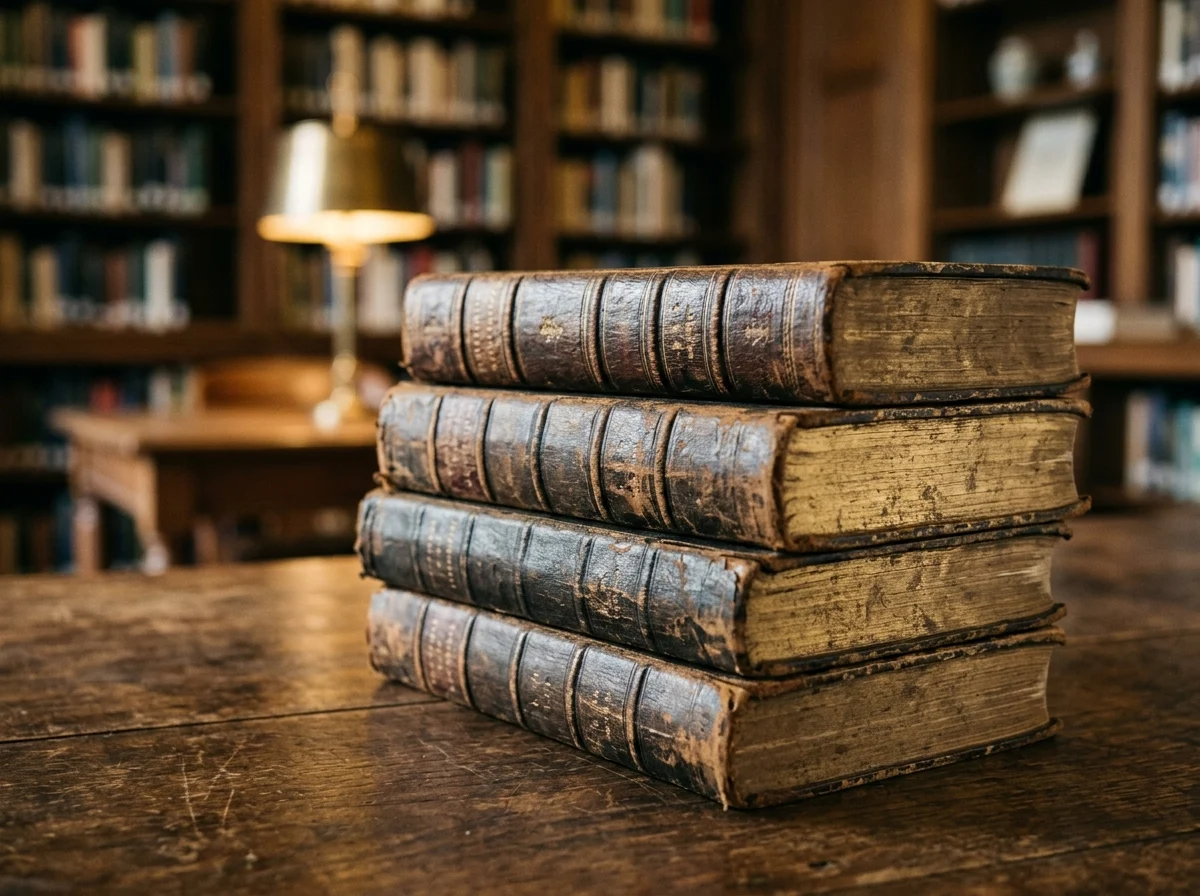
Why 'old' almost never means valuable on its own
Family bibles, antique encyclopedia sets, and 19th-century religious or reference books were printed in enormous numbers and survive by the millions. Age alone does not create scarcity when that many copies exist. Most of these have sentimental or genealogical value (a bible's family record pages, for instance) but very little resale value. Before assuming a book is worth something because it looks old and ornate, check whether it's actually rare, versus simply common and well preserved.
First edition vs. later printing
A true first edition, first printing of a notable title is worth researching; a later printing or book club edition of the same title usually is not, even if it looks nearly identical on the shelf. Publishers mark printings in different ways: a number line, a stated 'first edition' line, or specific points noted by collectors for that title. Book club editions are often smaller, lack a price on the jacket flap, and are far more common than the trade first. Identifying which one you have is the first real step.
Dust jackets, signatures, and inscriptions
For 20th-century books especially, the original dust jacket can matter more than the book itself; a first edition without its jacket is often worth a fraction of one with an intact, unclipped jacket. A genuine author signature or inscription can add meaningful interest, but signatures are also commonly forged or misattributed, so an unverified signature is a claim, not a fact. A personal inscription to a stranger can matter less to a collector than a plain signed copy, depending on the author and title.
Condition rules out almost everything else
Foxing (brown age spots), water stains, a cracked spine, missing pages, mold smell, or a previous owner's heavy writing throughout the text all reduce a book's desirability, sometimes to nearly nothing regardless of edition. Booksellers grade condition closely because collectors do too. A rare first edition in poor condition can be worth far less than a more common title in excellent, complete condition. Check for a complete text block, intact binding, and no active mold or pest damage before assuming a book is a lost cause either way.
Questions
Is my family bible worth money?
- Almost always its real value is genealogical and sentimental (family record pages, inscriptions) rather than monetary. Most 19th and early 20th century bibles were mass-printed and are common in the resale market.
How do I tell a first edition from a later printing?
- Check the copyright page for a stated edition or a number line, and compare against known points for that specific title, since practices vary by publisher and era. When it's unclear, that's a case for a specialist rather than a guess.
Do I need an appraisal for a book I'm donating or insuring?
- Yes. For tax deduction, insurance, or estate purposes you need a written appraisal from a qualified book or manuscript appraiser, not an informal opinion.