
House of Bid
Military memorabilia: what's actually collectible?
Genuinely collectible military memorabilia usually includes named or documented medals, uniforms and insignia tied to a specific unit or period, personal letters and photographs, and original paperwork. Mass-produced reproduction militaria — common on the collectibles market for decades — is usually worth little regardless of how authentic it looks. Firearms and other weapons found in an estate need licensed dealers and specific legal handling, not general research.
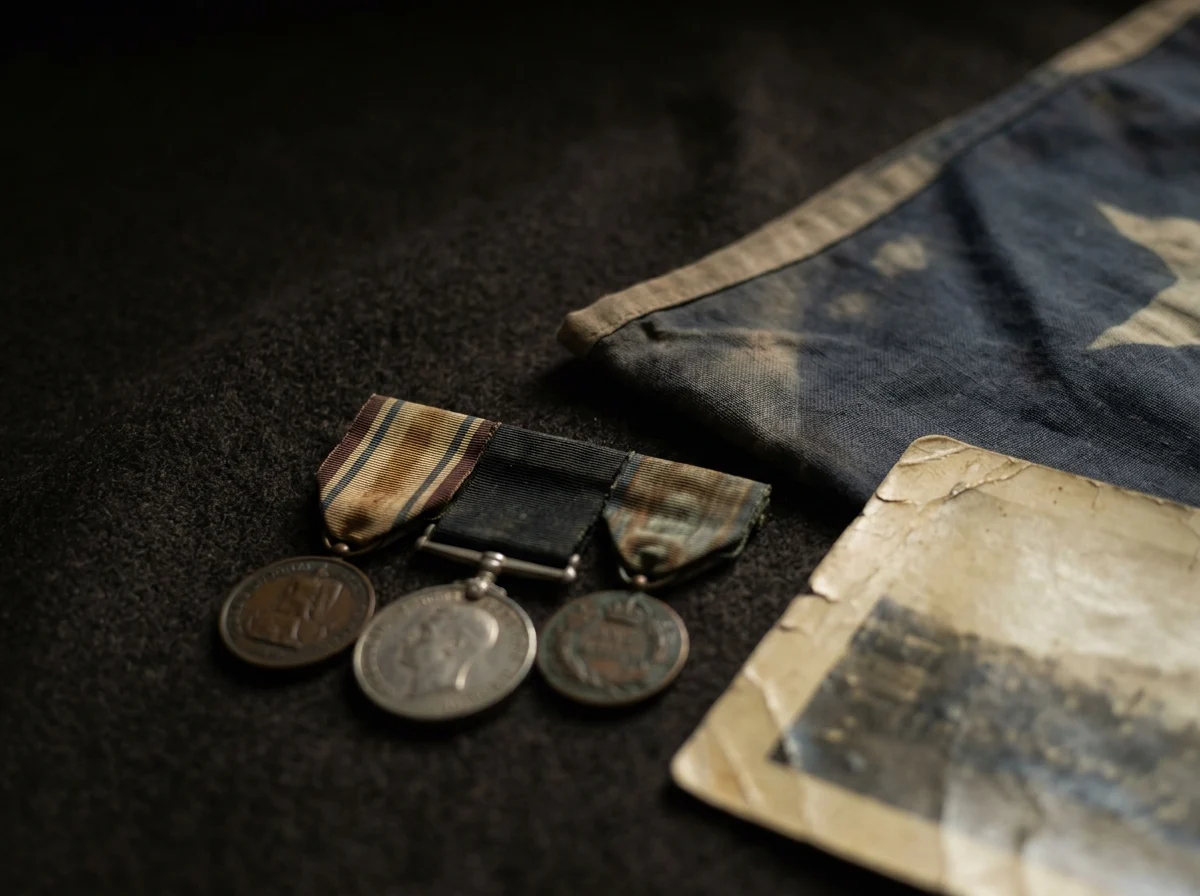
Medals, insignia, and documents
Medals and decorations that are named — engraved with a recipient's name, rank, or unit — carry more research value than an unnamed, generic example, because they can sometimes be traced to a specific service record. Unit patches, rank insignia, and dog tags are common finds and most are not individually rare, though a documented set tied to a known person is more interesting than loose pieces. Discharge papers, service records, and citations are worth keeping with any related items, since paperwork adds context that objects alone don't.
Uniforms, letters, and photographs
A complete uniform in good condition, especially with original insignia still attached, holds more interest than a jacket alone with pieces added later. Personal letters home, diaries, and photographs are often the most historically interesting items in a military estate, even though they're easy to overlook next to a medal or uniform — they document a specific person's actual experience, which collectors and researchers value. Handle paper items carefully and avoid unnecessary folding or unfolding of anything already brittle.
Reproduction militaria is common
Military collectibles have been reproduced for decades, both for reenactors and for the general collectibles market, so a large share of medals, patches, and uniform pieces in circulation are modern reproductions rather than period originals — some sold honestly as reproductions, some not. A reproduction can look convincing at a glance, which is why unit-specific research and, where it matters, an experienced militaria dealer's opinion are worth more than a visual guess. Don't assume age or a foreign-language mark means genuine.
Firearms and weapons need special handling
If a military estate includes firearms, bayonets, or other weapons, that's a separate category from paper and cloth items. Firearms in particular are subject to specific legal requirements around transfer and sale, and they need to go through a licensed firearms dealer rather than a general estate sale or auction process. Don't attempt to research, move, or sell a firearm the way you would a medal or uniform — get it in front of a licensed dealer first.
Questions
Are old military medals always valuable?
- Not automatically. Unnamed, mass-issued medals are common; named medals tied to a documented recipient or unit are more likely to have real collector interest.
What should I do with firearms found in an estate?
- Firearms require licensed dealers and specific legal handling — do not sell, ship, or transfer one through a general estate sale process. Contact a licensed firearms dealer first.
Is reproduction militaria worth researching?
- It's worth identifying as reproduction so you know what you have, but reproductions generally carry little collector value compared to documented originals.