
House of Bid
Coin collecting basics: are your coins actually valuable?
Most inherited coins are common dates trading near face or melt value, not rare finds. Real value comes from low mintage, high grade, and numismatic demand beyond metal content. Key dates and mint errors are the exception, not the rule. A coin dealer or grading service can tell you which bucket yours falls into.
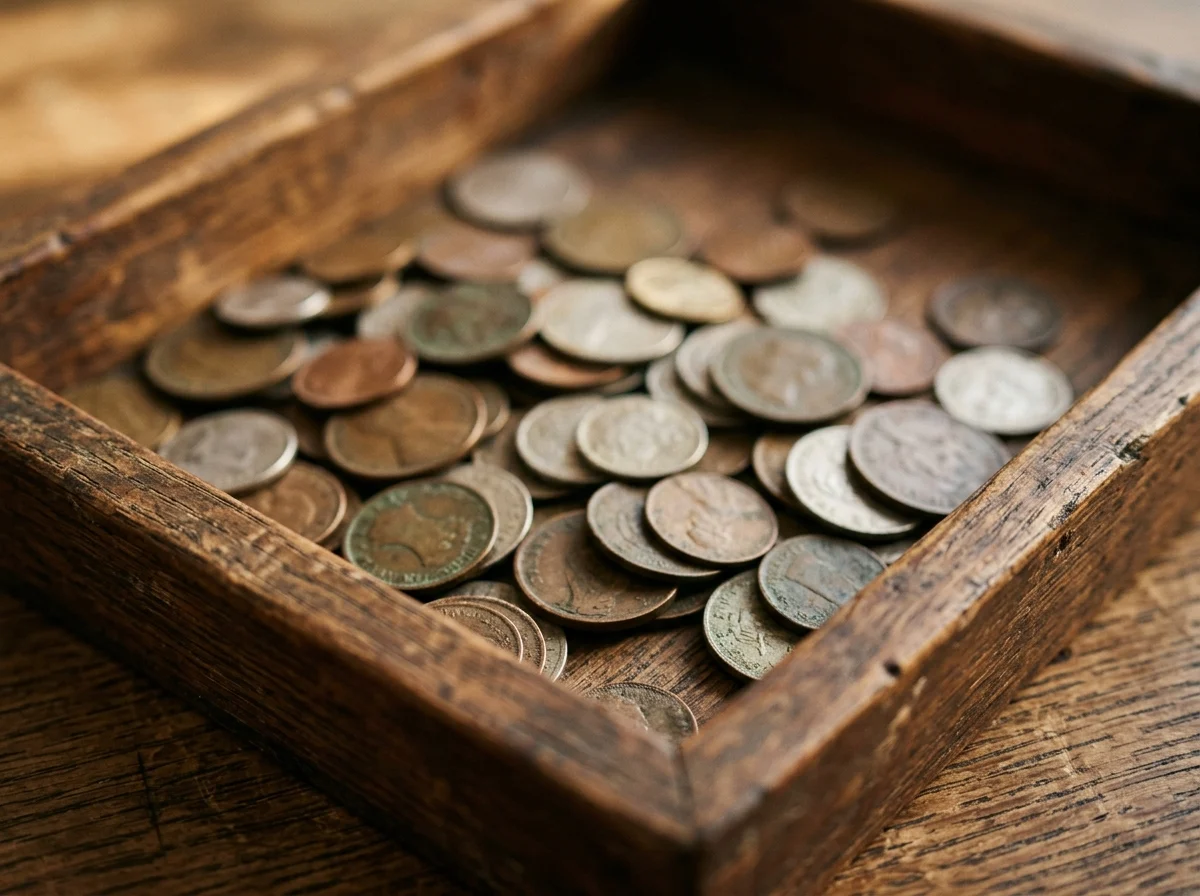
Mintage and rarity
Every coin has a mintage number — how many were struck that year at that mint. A coin from a year with a huge mintage is common no matter how old it looks; a coin from a low-mintage year or a specific mint mark can carry a real premium. Rarity is relative to the date and mint combination, not the coin's age alone. A 1920s coin isn't automatically scarce — some 1920s issues had millions struck and turn up in every collection.
Condition and grading
Condition, or grade, is often the biggest swing factor. A worn coin that circulated for decades looks flat and shows little detail; an uncirculated coin kept out of pocket change shows sharp strike lines and full luster. Professional grading services assign a numeric grade after examining a coin in hand, and that grade — not a guess from a photo — is what serious buyers rely on. Cleaning a coin to make it shinier almost always lowers its grade, not raises it.
Silver, gold, and melt value
Many older US coins were struck in silver before the mid-1960s, which gives them a floor value tied to the current metal price — separate from any collector premium. That melt value is easy to estimate from weight and metal content. Numismatic value sits on top of melt value only when rarity, condition, or demand for that specific date and mint pushes a coin above what its metal is worth. Most common-date silver coins trade close to melt, not above it.
Key dates and errors
Within an otherwise common series, certain years or mint marks are known as key dates because far fewer survived in good condition, and collectors specifically hunt for them to complete a set. Mint errors — a doubled die, an off-center strike, a wrong-metal planchet — are a separate category collectors chase regardless of the coin's date. Spotting either usually takes a reference guide or an experienced eye, since the differences from a common coin can be small.
Questions
Is an old coin automatically valuable?
- No. Age alone doesn't create value — mintage, condition, and collector demand for that specific date and mint do. Many coins from the 1800s and early 1900s are common and trade for modest amounts over face or melt value.
Should I clean my coins before getting them looked at?
- No. Cleaning strips original surface and toning that collectors and graders look for, and it typically lowers a coin's grade and value. Show them as found.
How do I find out what a collection is actually worth?
- A local coin dealer can give a quick read, and a third-party grading service can assign an official grade for anything that looks promising. For insurance or estate purposes, a certified coin appraiser is the right call.