
House of Bid
Mid-century modern furniture: why it's worth more now
Mid-century modern furniture, roughly 1940s through 1960s, has grown far more collectible as tastes shifted toward clean lines and warm wood. A piece by a named, documented designer draws much more interest than an unmarked piece in the style of the era. Original finish and solid teak or walnut beat a refinished piece or veneer.
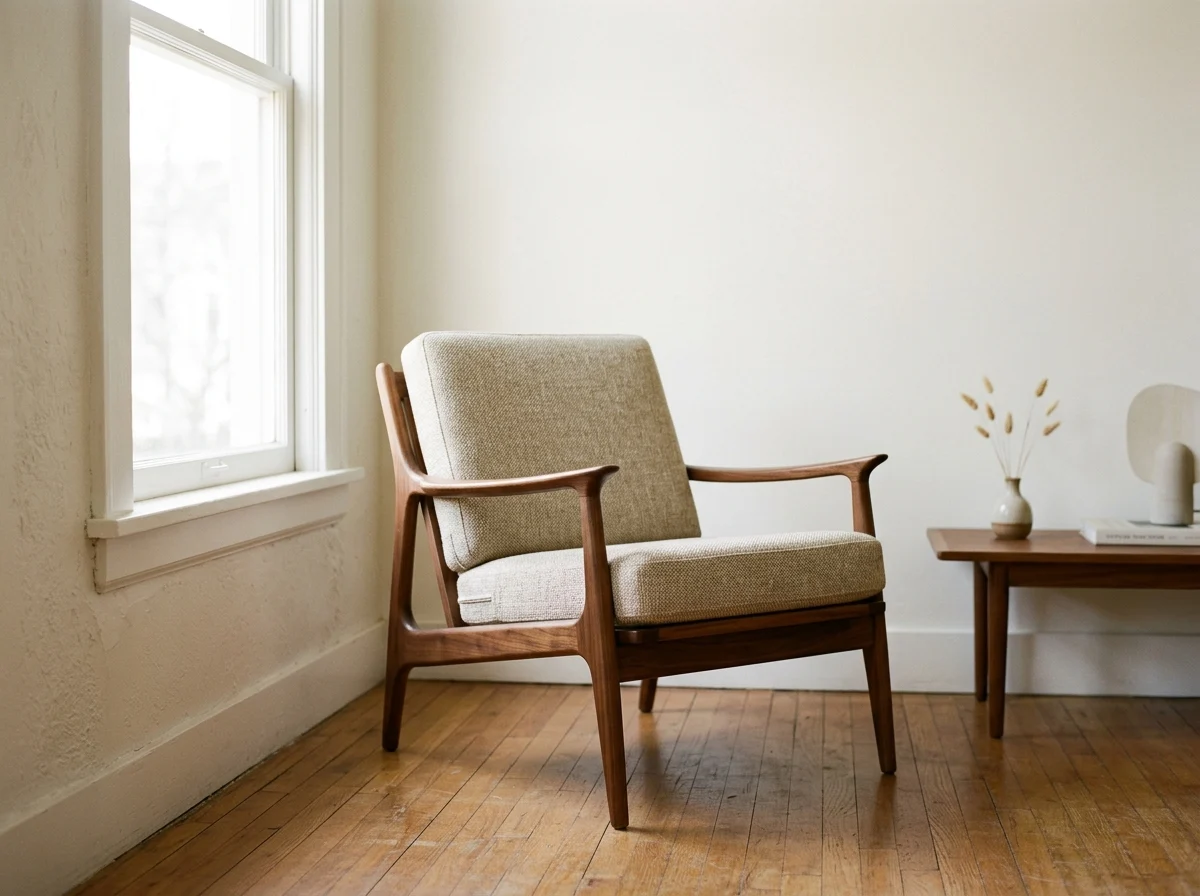
Named designers vs. unmarked pieces
A documented, labeled piece by a known mid-century designer or manufacturer carries meaningfully more collector interest than a similar-looking unmarked piece, even when the unmarked piece is well made. Check undersides, drawer interiors, and the backs of case pieces for manufacturer labels, stamps, or tags — mid-century manufacturers often marked their furniture, though labels can also fall off or wear away over decades. A piece described as 'in the style of' a designer, without documentation, should be valued as unattributed furniture, not assumed to be an unlabeled original.
Original finish vs. refinished
Collectors generally prefer furniture in its original finish, even with honest wear, over a piece that's been stripped and refinished, because refinishing changes the surface and can remove details original to the piece. A refinished piece isn't worthless, but it's typically valued differently than a comparable example in original condition. If a piece needs real repair, getting an opinion before altering the finish is worth the extra step, since that decision is hard to undo.
Teak, walnut, and solid construction
Much of the furniture associated with the mid-century period used teak or walnut, often as solid wood or high-quality veneer over solid wood, rather than the particleboard and thin veneers common in later mass production. Solid wood construction tends to hold up better physically over decades and is generally viewed as a mark of the era's better-made pieces. Weight, joinery, and the wood grain on an edge or underside can help distinguish solid construction from a veneered surface.
Why demand has grown
Mid-century modern design has had a well-documented resurgence in interior design over the past couple of decades, driven partly by its clean, minimal look fitting easily into contemporary homes. That renewed interest has pulled more attention — and more buyers — toward original pieces from the era, particularly ones with clear designer attribution. Demand doesn't affect every mid-century piece equally: unattributed, mass-produced furniture from the same decades hasn't seen the same jump as documented designer work.
Questions
Does 'mid-century style' mean the same thing as mid-century original?
- No. 'Mid-century style' or 'in the style of' usually describes a look, not an era-original piece. An original was actually manufactured during the mid-century period, generally the 1940s through 1960s.
Is refinished mid-century furniture worth selling?
- Yes, it can still sell, but it's typically valued differently than a comparable piece in original finish. Get an opinion on condition before assuming refinishing hurt or helped the value.
How can I tell if a piece is solid wood or veneer?
- Check an unfinished edge, the underside, or inside a drawer, where grain direction changes or a thin veneer layer is easier to spot than on a finished, visible surface.